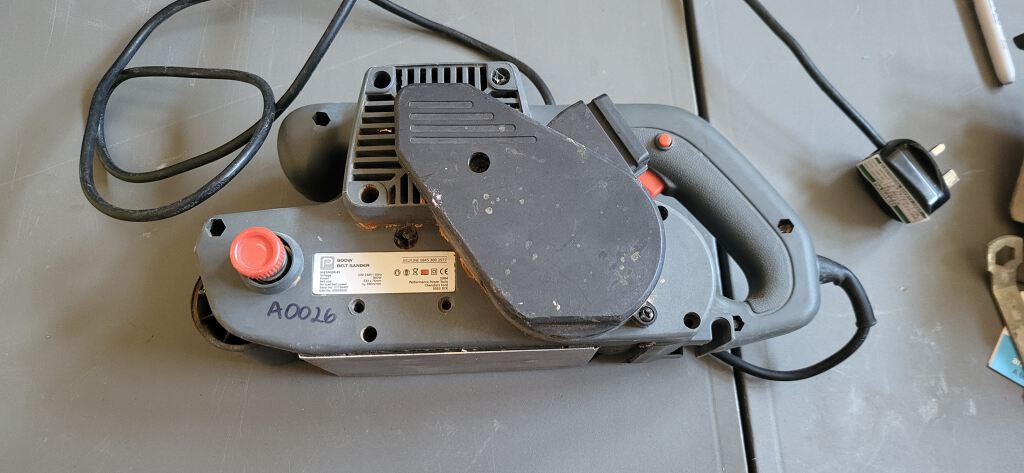
Borrow Belt sander
All items from Aberfeldy Tool Library
WHAT IT DOES
This is for sanding large flat timber surfaces, particularly for a first pass. Ideal for getting a rough finish on new wood or for removing paint, varnish, etc. Look at a random orbital or sheet or palm sander if you want more control or a finer finish and at a detail sander or mouse sander for sanding in corners.
For heavy-duty sanding jobs. Not for floors.
This is for sanding large flat timber surfaces, particularly for a first pass. Ideal for getting a rough finish on new wood or for removing paint, varnish, etc. Look at a random orbital or sheet or palm sander if you want more control or a finer finish and at a detail sander or mouse sander for sanding in corners.
For heavy-duty sanding jobs. Not for floors.
SAFETY INFORMATION & PPE
YOU MAY ALSO NEED
HOW TO USE IT
The sander can remove a lot of material quickly. Keep the motion even and take care. Always sand in the direction of the grain.
INSTRUCTIONAL VIDEOS
Note that this video is a general introduction and is not specific to this exact tool. We always advise reading the manual if provided below, especially the safety advisories, before using any tools.
- Safety glasses – Essential
- Dust mask – Essential
- Ear protection – Recommended
YOU MAY ALSO NEED
- Consumables – Sanding belts – Essential. We can’t guarantee availability, but we normally have a small selection that you can purchase. You may need to buy your own from B+Q, Screwfix, etc. See our Guide to buying and using sandpapers: edinburghtoollibrary.org.uk/guides/
- Work bench, clamps – Useful to hold your work securely in place and prevent it from moving.
- Other types of sanders – You may need other types of sanders for places the belt sander cannot reach, e.g. the edges of a floor. A detail sander or even a scraper or hand sanding block and paper may come in handy. A finishing sander might also be needed to get a great finish.
HOW TO USE IT
The sander can remove a lot of material quickly. Keep the motion even and take care. Always sand in the direction of the grain.
INSTRUCTIONAL VIDEOS
Note that this video is a general introduction and is not specific to this exact tool. We always advise reading the manual if provided below, especially the safety advisories, before using any tools.